Ingredients
Equipment
Method
make the levain
- Mix 25g starter, 50g water, and 50g flour in a small jar. Cover and let it ferment at room temperature for 4-6 hours or until bubbly and doubled in size. Once ready, use 120 grams of it for the recipe.
Mix and dough
- Combine the sourdough starter and water in a large mixing bowl, then use a dough whisk to melt the starter into the water. Add the flour and salt, and mix until just incorporated. Cover and let the dough rest for 1 hour to allow for autolyse.
Stretch and Fold with Butter Incorporation
- To prevent the butter from melting into the dough too soon, keep your dough in a cooler area (ideally 68-72°F/20-22°C) during the stretch and folds. If your kitchen is too warm, consider placing the dough near an open window or in a cooler part of your home. You want the butter to stay solid enough to create layers within the dough rather than fully blending in.Perform three sets of stretch and folds every hour, incorporating half of the grated butter during the first set and the rest into the second stretch and fold session. (Sprinkle a portion of the butter over the dough and gently fold it in, ensuring even distribution.) The dough may feel softer than usual but should still hold its shape. After the last fold, let the dough rest for another hour.
Shape and Cold Ferment
- Shape the dough into a boule, cover it, and let it rest for 30 minutes, then do the final shaping (letter fold method). Transfer the sourdough croissant dough into a floured-proofing basket. Cover using these reusable beeswax food wraps and refrigerate overnight for a cold ferment (8-16 hours). This enhances the flavor and structure of the loaf.
Bake
- Preheat your oven to 475°F (245°C) with a Dutch oven inside. Once hot, carefully transfer the chilled dough onto parchment paper or a bread sling, score the top, and bake covered for 40 minutes. Remove the lid and bake for another 5-10 minutes until golden brown.
Cool and Enjoy
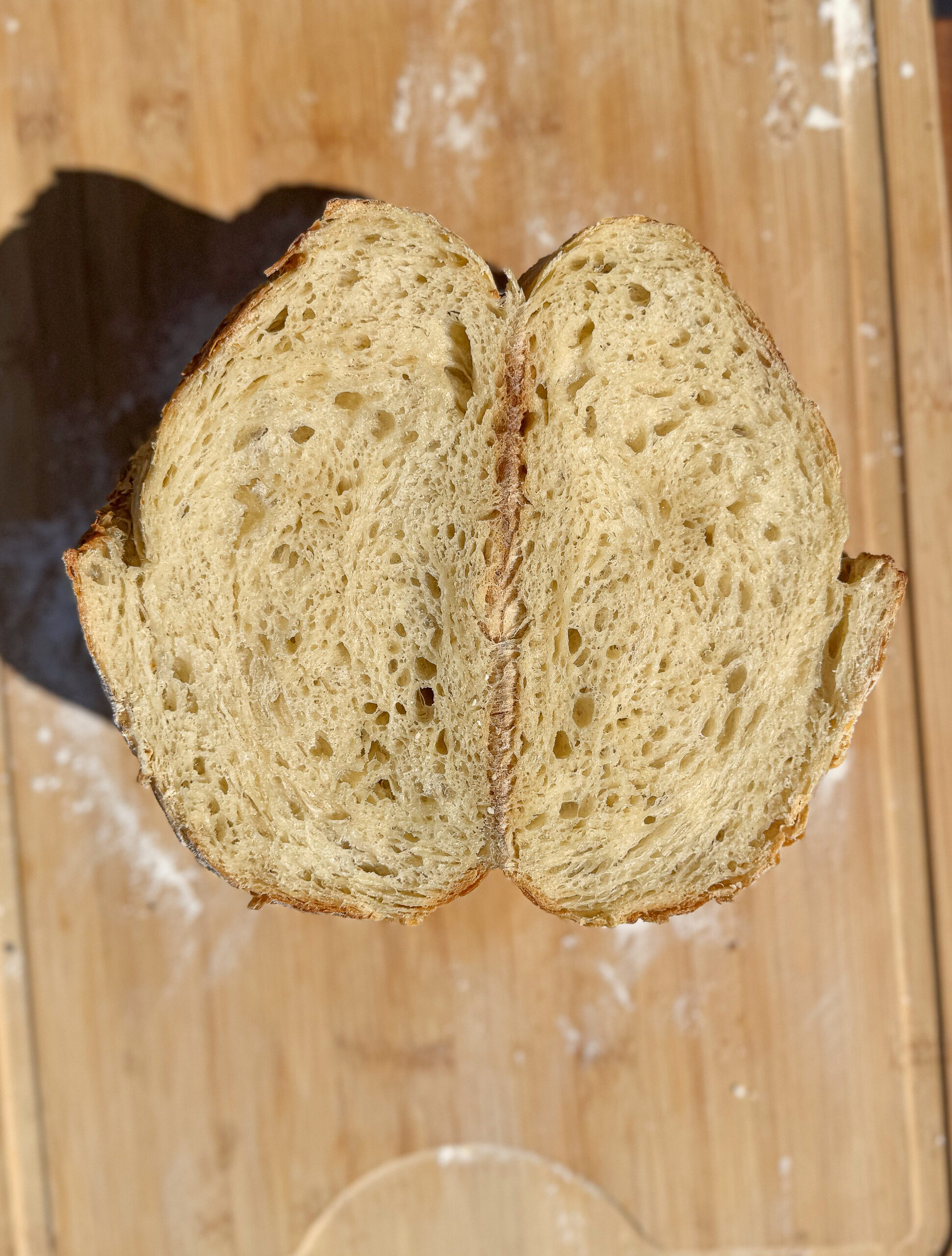
- Let the sourdough croissant loaf cool completely before slicing. You’ll notice a tender, slightly flaky interior with a rich, buttery aroma—like a perfect marriage of sourdough and croissant!
Notes
The bottom of my loaf burned—why?
This often happens if the Dutch oven gets too hot. Try these fixes:- Place a baking sheet on the rack below to diffuse heat.
- Use parchment paper to create a buffer between the dough and the Dutch oven.
- Reduce the temperature slightly if your oven runs hot.
What inclusions can I add?
You can get creative with add-ins! Some great options include:- Cheese: Parmesan, cheddar, or gruyère for a savory kick.
- Herbs & Spices: Rosemary, thyme, or garlic powder to complement the butter.
- Sweet Additions: Cinnamon and sugar for a dessert-like twist.
- Dried Fruit & Nuts: Cranberries, raisins, walnuts, or pecans for extra texture and flavor.