
Sourdough Discard Cheddar Chive Scones
If you’re looking for a go-to way to use up sourdough starter discard, these Sourdough Discard Cheddar Chive Scones are one of the easiest and most flavorful options. They’re tender, savory, deeply cheesy, and finished with a garlic-heavy cream wash that bakes into a beautifully golden brown crust.
Ingredients
Dry Ingredients
- 280 g all-purpose flour (plain flour)
- 12 g baking powder
- 5 g sea salt (about 1 tsp salt)
- 85 g cold unsalted butter, grated or cut into small cubes
Wet Ingredients
- 120 g sourdough starter discard
- 120-160 g cold buttermilk (start with 120g and adjust as needed)
Add-Ins
- 140 g grated cheese (sharp cheddar, vintage cheddar cheese, gruyère, parmesan, feta, or a mixture of different cheeses)
- 15 g fresh herbs (chives, wild garlic, green onions, spring onions, thyme, dill, or rosemary)
Garlic Cream Wash (for top of the scones)
- 1 egg yolk
- 2 tbl heavy cream
- 2 cloves fresh garlic, pressed
Instructions
Preheat Oven
- Preheat to 400 degrees Fahrenheit (205°C). Line a prepared baking sheet or baking tray with parchment paper.
Combine Flour Mixture
- In a large bowl, combine flour, baking powder, and sea salt. Whisk thoroughly to evenly distribute the baking powder.
Cut in Cold Butter
- Add cold unsalted butter (grated or in small cubes). Using a pastry cutter, pastry blender, or your fingertips, cut butter into the flour mixture until it resembles coarse crumbs with pea-sized pieces.Avoid too much mixing. Visible butter pockets are essential for flaky layers.
Add Cheese & Herbs
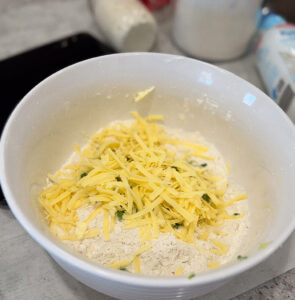
- Fold in grated cheese and finely chopped herbs. Tossing them through the dry ingredients helps distribute evenly before adding wet ingredients.
Add Discard & Buttermilk
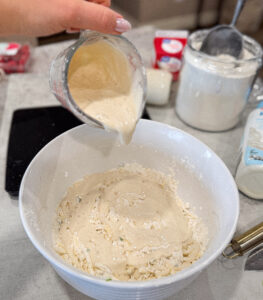
- Stir in sourdough starter discard. Slowly add cold buttermilk, starting with 120 g.Mix gently until a shaggy dough forms. The dough should just hold together. If dry patches remain at the bottom of the bowl, add buttermilk gradually.The scone dough should not be sticky. If it becomes wet, sprinkle in a small dusting of flour.
Shape the Dough
- Turn dough onto a lightly floured surface. Gently press into a rectangle or a circle about 1 inch thick.Using a sharp knife or bench scraper, cut into 8 squares or scone shapes. Clean cuts help create better rise.Transfer to prepared baking sheet. Chill unbaked scones for 15–20 minutes. This re-solidifies the butter and improves structure.

Garlic Cream Wash
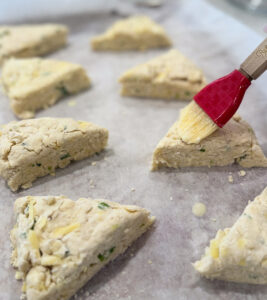
- In a small bowl, whisk egg yolk, heavy cream, and pressed garlic. Using a pastry brush, lightly brush over the top of the scones.Optional: sprinkle flaky sea salt.
Bake
- Bake for 18–22 minutes, until tops are golden brown and bottoms are firm.Check bottom of the scones — they should feel set and lightly crisp.Cool slightly before serving.

Notes
Troubleshooting
Why are my scones dense?
- Butter was too warm
- Overmixed dough
- Too much liquid
- Baking powder expired
Why did they spread?
- Skipped chilling step
- Butter softened
- Too much buttermilk
Why are they dry?
- Too much flour
- Not enough buttermilk
- Overbaked