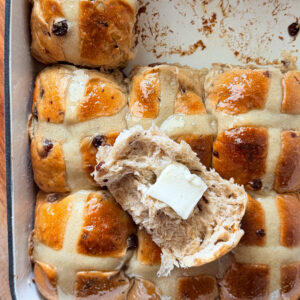
Sourdough Hot Cross Buns (Soft & Fluffy with Sweet Stiff Starter)
This sourdough hot cross buns recipe gives you everything you want in a classic Easter bake—soft, fluffy buns with a lightly spiced dough, a glossy finish, and that perfect pull-apart texture. If you’ve tried traditional hot cross buns before and found them a little dry or dense, this sourdough version is a total upgrade.
Equipment
- stand mixer with dough hook
- Food scale
- baking pan
Ingredients
Sweet Stiff Starter (prepare ahead)
- 30 g active sourdough starter
- 50 g white flour
- 20 g water
- 5 g honey
Hot Cross Bun Dough
- 500 g strong white bread flour
- 100 g sweet stiff starter
- 270 g room temperature milk
- 75 g sugar
- 1 large egg
- 75 g unsalted butter, softened
- 8 g salt
- 1 tsp cinnamon
- 1/4 tsp nutmeg
- 150 g dried fruit (raisins or currants)
- 1 cup Orange juice (for soaking the fruit)
- Optional: orange zest or orange peel
Flour Paste (for crosses)
- 50 g all-purpose flour
- 60 g water
Sugar Syrup Glaze
- 2 tbl sugar
- 2 tbl water
Instructions
Feed the Sweet Stiff Starter
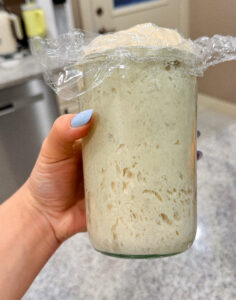
- In a small bowl or clean jar, mix the active starter, flour, water, and honey until a stiff dough forms. It should feel like a soft dough ball, not pourable.Cover loosely and let it rise in a warm spot until:This step is important because a properly fermented starter will give your buns a better rise and softer texture.slightly domed on topexpanded in size (about 1.5–2x)smells mildly sweet, not overly sour
Soak the Dried Fruit
- Place your dried fruit in a small bowl and cover with warm orange juice. Let it sit for 15–20 minutes.
Mix the Dough
- In the bowl of a stand mixer, combine: milk, sweet stiff starter, sugar, and egg.Mix until smooth and the starter is broken up.Add: bread flour, salt, cinnamon, nutmeg.Mix until a shaggy dough forms. The dough may look slightly rough at this stage—that’s normal.Let the dough rest for 20–30 minutes. This rest period helps hydrate the flour and makes it easier to develop gluten.
Develop the Dough
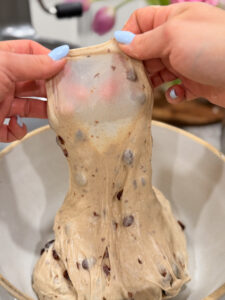
- Attach the dough hook and begin mixing on medium speed for 5 minutes. Add the softened butter gradually, allowing it to fully incorporate before adding more.Continue mixing for 15–25 minutes. (let the mixer rest if it gets too hot)This step takes patience, but it’s key for soft buns. You’re looking for: smooth, elastic doughdough that wraps around the hook, slightly sticky dough (not dry or stiff)You want it to pass the window pane test!If your dough feels too stiff at this stage, add 1 tablespoon of milk at a time until it softens.
Add the Dried Fruit
- . Drain the fruit well and lightly pat dry before adding to the dough. This prevents adding too much extra moisture while still keeping the fruit soft and flavorful Add the fruit and mix until evenly distributed throughout the dough. Should take up to 5 minutes.
Bulk Fermentation (First Rise)
- Transfer the dough to a large bowl and cover with plastic wrap or a damp tea towel.Let it rise in a warm place for 4–6 hours.You are not looking for the dough to double. Instead, look for:about 30–50% risea slightly puffy textureBecause this is an enriched dough, the rise will be slower than a typical sourdough bread recipe.
Shape the Dough
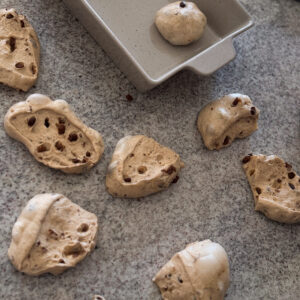
- Turn the dough onto a lightly floured work surface.Divide into equal pieces (about 12). Each piece should be around 85–90 grams.Shape into smooth dough balls by tightening the surface and rolling gently.Place the dough balls into a parchment paper-lined baking dish, leaving a little space between them.
Final Proof (Second Rise)
- Cover the shaped buns and let them rise for 2–3 hours, or refrigerate overnight and bake the next day.They are ready when it is noticeably puffy, soft to the touch, slightly jiggly, and gently springs back when you press on it.
Pipe the Crosses
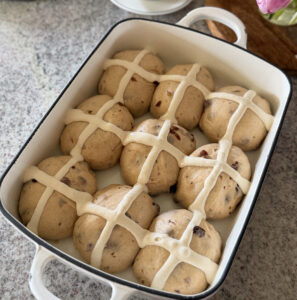
- In a separate bowl, mix flour and water into a thick paste.Transfer to a piping bag or plastic bag and snip the corner.Pipe crosses over each bun right before baking. Make sure the lines are thick enough to stay visible after baking.
Bake
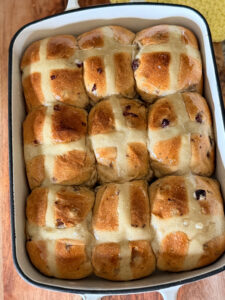
- Bake in a preheated oven at 375°F (190°C) for 20–25 minutes.The buns should be: deep golden brownfully baked through (internal temp around 200°F if you check)
Glaze
- In a small saucepan over medium heat, combine sugar and water until dissolved.Brush the buns with a pastry brush while they are still hot.This creates a soft, shiny finish and keeps the tops from drying out.
Notes
Tips for Best Results
- Use room temperature ingredients for smoother mixing
- Always add extra liquid when using a stiff starter
- Dough should feel soft and slightly sticky—not stiff
- Mix long enough to fully develop the dough
- Pat dried fruit dry before adding
- Pipe crosses thick enough to hold shape
- Skip the egg wash—the sugar syrup gives a better finish