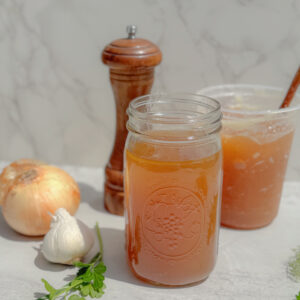
Beef bone broth
There’s something deeply comforting about a pot of homemade nutrient-dense bone broth gently simmering away on the stove. It fills the house with that cozy, slow-cooked aroma, and the end result is liquid gold — full of flavor, nutrients, and so many possibilities. I always keep a stash in my freezer for soups, Russian stews, gravy, or just sipping from a mug on chilly days.
Equipment
- Large stockpot (at least 8 quarts) – for stovetop simmering
- Roasting pan or sheet pan – to roast the bones for flavor
- Fine mesh strainer or cheesecloth – to strain the broth
- Mason jars or freezer-safe containers – for storing the finished broth
- Tongs – to handle hot bones and transfer them between steps
- Ladle – for serving and pouring into jars
- Skimmer or large spoon – to remove foam/scum from the top while simmering
- Jar funnel (optional but helpful) – makes pouring into jars a lot less messy
Ingredients
- 3-4 lbs assorted beef bones
- 2 tbl 2 tbsp apple cider vinegar
- 1 large onion, quartered (no need to peel)
- 2-3 carrots, roughly chopped
- 2 celery stalks, roughly chopped
- 1 1 head of garlic (you can roast it with the bones for more flavor)
- 2 bay leaves
- 1 tsp whole black peppercorns
- Optional: thyme, rosemary, parsley stems, or dried chili
- Cold water, enough to cover bones
Instructions
Soak the Bones (Recommended)
- Before roasting, place your bones in a large bowl and cover with cold water. Let them soak for 30–60 minutes to help draw out any blood and impurities. This gives your broth a cleaner, more refined flavor. Drain and pat the bones dry before moving on.

Roast for Flavor
- Preheat your oven to 425°F (220°C). Arrange the bones on a Roasting pan or a baking sheet, along with the garlic, and roast for 30–45 minutes, or until they’re deeply browned. Roasting adds a deep, savory richness to your broth.Kitchen Tip: After roasting, pour off the rendered fat from the pan into a mason jar and store it in the fridge. This flavorful beef fat is perfect for sautéing veggies, searing meats, or even frying eggs. Waste nothing!

Transfer to a Stockpot
- Place the roasted bones in a large pot. Add the vinegar and enough cold water to fully cover them. Let it sit for 30 minutes before turning on the heat — the vinegar helps break down the collagen in the bones.

Add the Vegetables & Aromatics
- Add the onion, carrots, celery, roasted garlic, bay leaves, and any additional herbs you prefer.
Bring to a Simmer
- Slowly bring the pot to a gentle boil. Skim off any foam or scum that rises to the surface — this helps keep the broth clear. Once it simmers, reduce the heat to low and maintain a very low simmer. Avoid using high heat during the cooking process.
Simmer Low & Slow
- Cover with a lid and simmer on low heat for 12–24 hours. The longer it simmers, the more nutrients and flavor you extract. Add water if needed to keep bones submerged. Add more water if needed to keep the bones in water.
Strain and Cool
- Let the beef bone broth cool for a few hours in the pot, so it’s easier to handle. Carefully remove the bones using tongs. Strain the broth through a fine-mesh strainer or cheesecloth into 1/2 gallon jars. Let it cool completely.
Store It
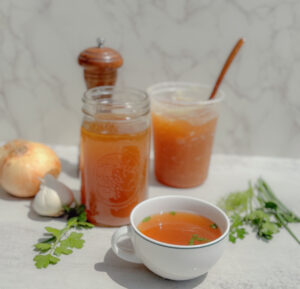
- After transferring the broth to jars or containers, store it in the refrigerator. You’ll notice the fat rises and forms a seal — you can leave it on to protect the broth, or remove it if you prefer and use it instead of oil in cooking.
Notes
What’s the Right Water-to-Bone Ratio?
Here’s a simple guideline:👉 Fill your pot halfway with bones, then top it off with cold water. This gives you a strong, rich broth without being too diluted or too thick. If you use too many bones, you might not fully extract the flavor. Too little, and it can turn out watery.
The Jello Test: What It Means
When your broth chills in the fridge, it should set up like jello — jiggly and thick. That’s exactly what you want! It means:- Your broth is rich in gelatin and collagen
- You got the water-to-bone ratio just right
- You simmered long enough for maximum extraction
How to Store Beef Bone Broth
- Fridge: Keeps for up to 5 days in a sealed jar
- Freezer: Freeze in jars, quart containers, or silicone molds for up to 6 months
- Pro Tip: Freeze some in ice cube trays for quick portions