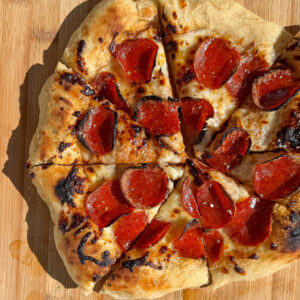
Sourdough Pizza Crust
This sourdough pizza crust is perfectly crispy on the outside, soft and airy on the inside, and packed with that signature tangy flavor only natural fermentation can provide.
Equipment
- Pizza oven, baking steel, pizza stone, or a cast iron skillet
- Kitchen scale
- Large mixing bowl
Ingredients
- 100 g active sourdough starter- You can also use sourdough discard
- 350 g warm filtered water
- 10 g fine sea salt
- 30 g olive oil
- 500 g all-purpose flour- avoid bread flour for a light and chewy crust.
Instructions
The Night Before: Mix and Ferment
- Grab a large mixing bowl—bigger than you think you’ll need because this dough is going to rise! Add all the ingredients and mix by hand until everything is incorporated. It’s going to be a soft and slightly wet dough at first, but don’t worry—it will come together beautifully. Cover the bowl with a clean towel or a shower cap and let it sit at room temperature overnight. This bulk fermentation is where the magic happens!
The Next Morning: Strengthen the Dough
- Now that your dough has had time to develop, it’s time to build strength. Wet your hands with a bit of water so the dough doesn’t stick, then perform a set of stretch and folds. Picture this: gently grab one side of the dough, stretch it up, then fold it over onto itself. Rotate the bowl and repeat this on all four sides until you’ve gone full circle. This helps create structure and those beautiful air pockets we love in a great pizza crust.Once you’ve completed your stretch and folds, cover the bowl again and pop it in the fridge for up to 36 hours. This step is optional, but if you have the time, it deepens the flavor and makes the dough even easier to work with.
Preparing to Bake
- When you’re ready to make your pizzas, remove the dough from the fridge and let it rest at room temperature for about 30 minutes—just enough to take the chill off and make it easier to work with. While the dough is resting, generously flour your work surface to prevent sticking. Using a bench scraper, divide the dough into four equal portions and gently shape each piece into a smooth dough ball. Cover the dough balls with a clean tea towel and allow them to rest for another 30 minutes. This final resting period helps the gluten relax, making it much easier to stretch the dough into a thin, even crust without tearing.
Cooking the Pizza
- For Piezano Pizza Oven: Preheat your Piezano pizza oven to 800°F. While the oven heats, take one of your dough balls and begin shaping it into an 8-inch circle on a well-floured surface. Start by gently pressing from the center outward, stretching the dough with your hands. If it resists and shrinks back, let it rest for another 15 minutes to relax the gluten, then continue shaping until you reach your desired size.Once your dough is shaped, place it onto a wooden paddle and poke holes in the crust using a fork. Drizzle some extra virgin olive oil and use a brush to evenly distribute it over the crust. Add your sauce (I highly recommend our homemade marinara sauce) and toppings while the dough is on the paddle. Use the paddle to carefully transfer the pizza into the Piezano pizza oven. Cook for about 5-6 minutes until the bottom is golden brown with slight charring.For Conventional Oven: Turn on your oven’s broiler and place a cast iron skillet or a pizza stone inside to preheat. You want that skillet to be hot—this is key to getting a perfectly charred crust.While the skillet heats, take one of your dough balls and shape it into an 8-inch circle on a well-floured surface. Once the skillet is ready, carefully lay the stretched-out dough onto the hot skillet and poke holes in the crust with a fork. Drizzle some extra virgin olive oil and use a brush to distribute it evenly over the crust, then immediately add your sauce and toppings. Keep it simple so the crust remains the star—think fresh mozzarella, basil, and a drizzle of olive oil. Cook for about 5-9 minutes until the bottom is golden brown with slight charring. Keep an eye on it. Once the cheese is melted and bubbly, and the crust looks beautifully crisp, it’s ready to come out. Let it cool for just a few minutes before slicing in—you don’t want to burn your mouth, but you also don’t want to wait too long!
Notes
Best Tips For Sourdough Pizza Crust:
- Use a mature starter: Your sourdough starter should be bubbly and active for the best rise.
- Cold fermentation for enhanced flavor: If you have time, letting the dough sit in the fridge for 12-24 hours will develop a richer taste.
- High heat is key: A hot oven ensures a crispy crust, so don’t skimp on preheating.
- Less is more with toppings: Too many toppings can weigh the dough down and make it soggy—keep it light and fresh!