
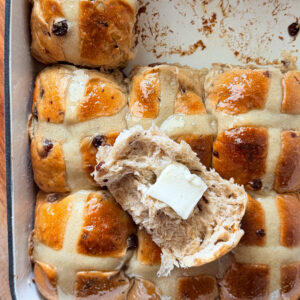
This sourdough hot cross buns recipe gives you everything you want in a classic Easter bake—soft, fluffy buns with a lightly spiced dough, a glossy finish, and that perfect pull-apart texture.
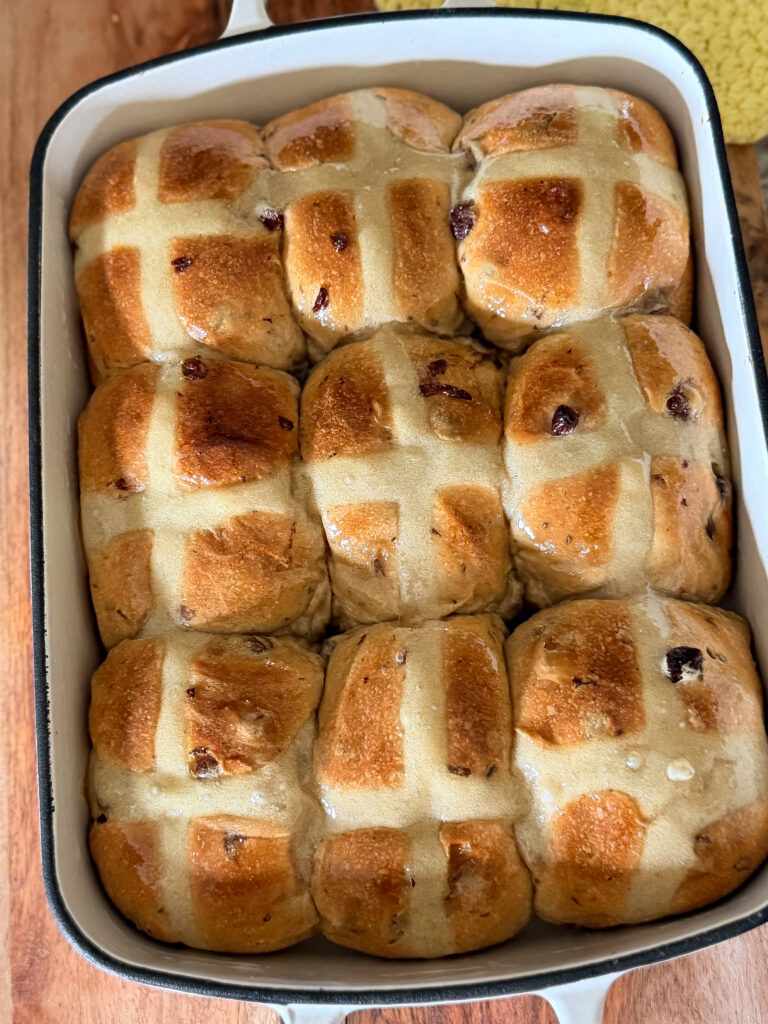
Instead of using commercial yeast, this recipe uses a sweet stiff starter, which creates a more tender crumb and a balanced flavor that isn’t overly sour. The addition of orange juice-soaked dried fruit adds moisture and a subtle citrus flavor, pairing beautifully with the warm spices.
These buns are perfect for Good Friday, Easter weekend, or honestly on a regular basis once you realize how good they are.
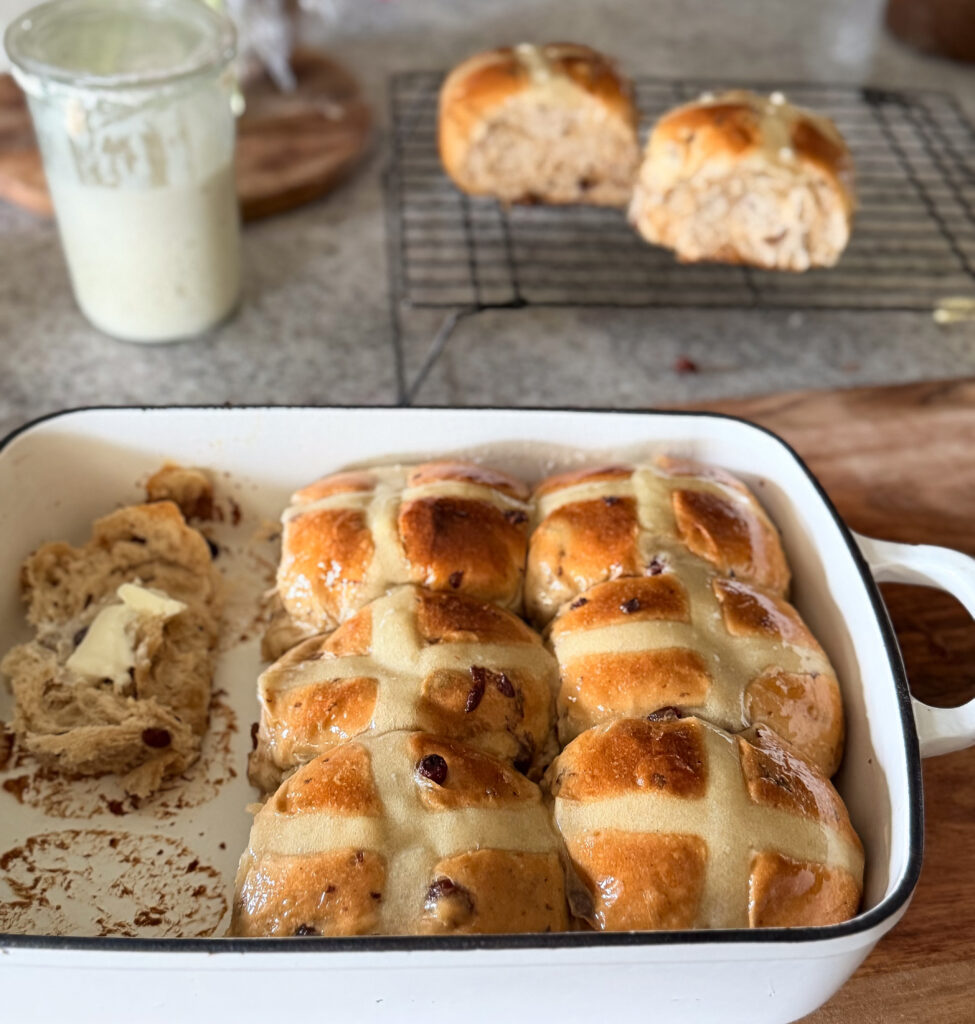
Why This Recipe Works
This hot cross bun recipe is a little different from traditional versions, but every step has a purpose:
- Sweet stiff starter → gives you better structure and less sour flavor
- Extra milk in the dough → balances the lower hydration of the stiff starter
- Proper dough development → creates a soft, fluffy crumb instead of dense buns
- Orange juice-soaked dried fruit → adds moisture and flavor
- No egg wash needed → simple syrup gives you that classic glossy finish
The result is a sourdough version of hot cross buns that feels bakery-quality but is still easy enough to make at home.
Dough Ingredients
Sweet Stiff Starter (prepare ahead)
- 30 g active sourdough starter
- 50 g white flour
- 20 g water
- 5 g honey
Feed your starter in a clean jar and let it rise in a warm place until slightly domed. This can take anywhere from 8–12 hours depending on your kitchen temperature.
Hot Cross Bun Dough
- 500 g strong white bread flour
- 100 g sweet stiff starter
- 270 g room temperature milk(important—this extra liquid prevents a stiff dough)
- 75 g sugar
- 1 large egg
- 75 g unsalted butter, softened
- 8 g salt
- 1 tsp cinnamon
- ¼ tsp nutmeg
- 150 g dried fruit (raisins or currants)
- Orange juice (for soaking)
- Optional: orange zest or orange peel
Flour Paste (for crosses)
- 50 g all-purpose flour
- 60–70 g water
Sugar Syrup Glaze
- 2 tbsp sugar
- 2 tbsp water
Instructions
1. Feed the Sweet Stiff Starter
In a small bowl or clean jar, mix the active starter, flour, water, and honey until a stiff dough forms. It should feel like a soft dough ball, not pourable.
Cover loosely and let it rise in a warm spot until:
- slightly domed on top
- expanded in size (about 1.5–2x)
- smells mildly sweet, not overly sour
This step is important because a properly fermented starter will give your buns a better rise and softer texture.
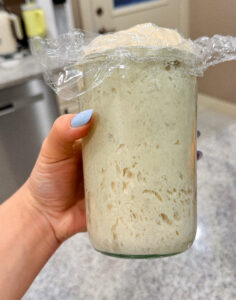
When is the stiff starter ready to use?
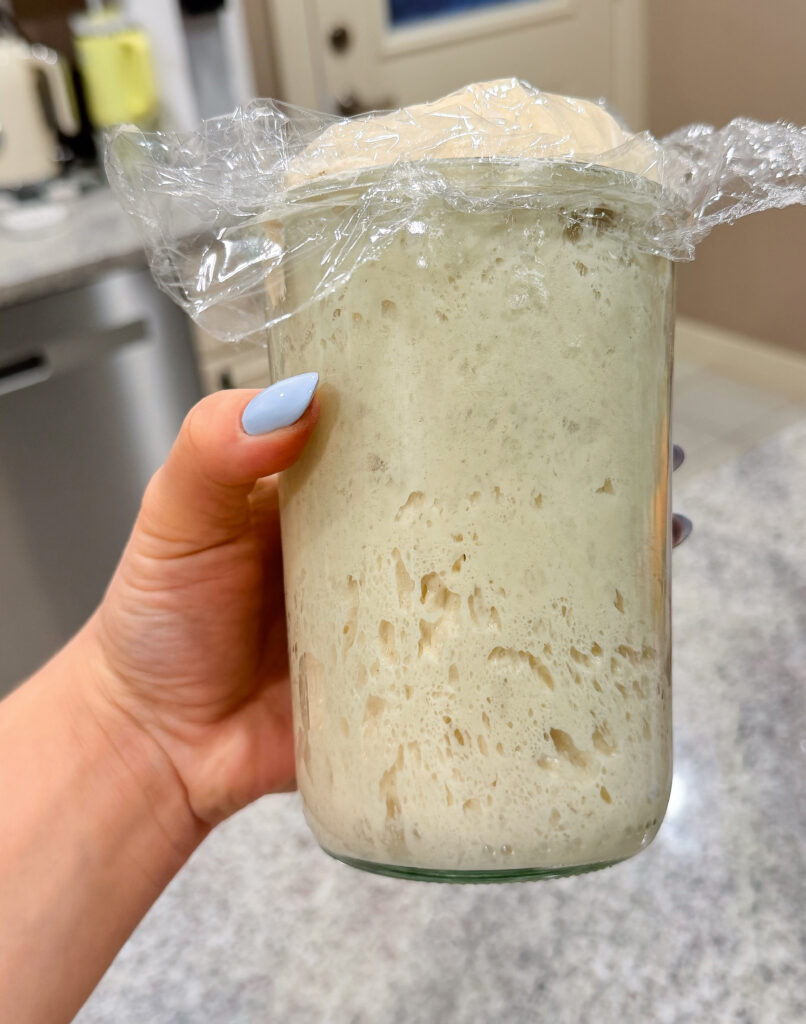
Use your sweet stiff starter when it has almost finished rising and still has a slightly rounded (domed) top.
You’re looking for:
- about 1.5–2x in size
- a soft, airy texture inside
- the top is gently rounded, not flat
You want to use it right before it starts to level out or collapse.
If the top has already flattened or sunk in the center, it’s slightly past its peak and may be more acidic with weaker structure.
2. Soak the Dried Fruit
Place your dried fruit in a small bowl and cover with warm orange juice. Let it sit for 15–20 minutes.
Drain well and lightly pat dry before adding to the dough. This prevents adding too much extra moisture while still keeping the fruit soft and flavorful.
3. Mix the Dough
In the bowl of a stand mixer, combine:
- milk
- sweet stiff starter
- sugar
- egg
Mix until smooth and the starter is broken up.
Add:
- bread flour
- salt
- cinnamon
- nutmeg
Mix until a shaggy dough forms. The dough may look slightly rough at this stage—that’s normal.
Let the dough rest for 20–30 minutes. This rest period helps hydrate the flour and makes it easier to develop gluten.
4. Develop the Dough
Attach the dough hook and begin mixing on medium speed for 5 minutes. Add the softened butter gradually, allowing it to fully incorporate before adding more.
Continue mixing for 15–25 minutes.
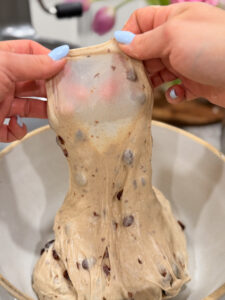
This step takes patience, but it’s key for soft buns. You’re looking for:
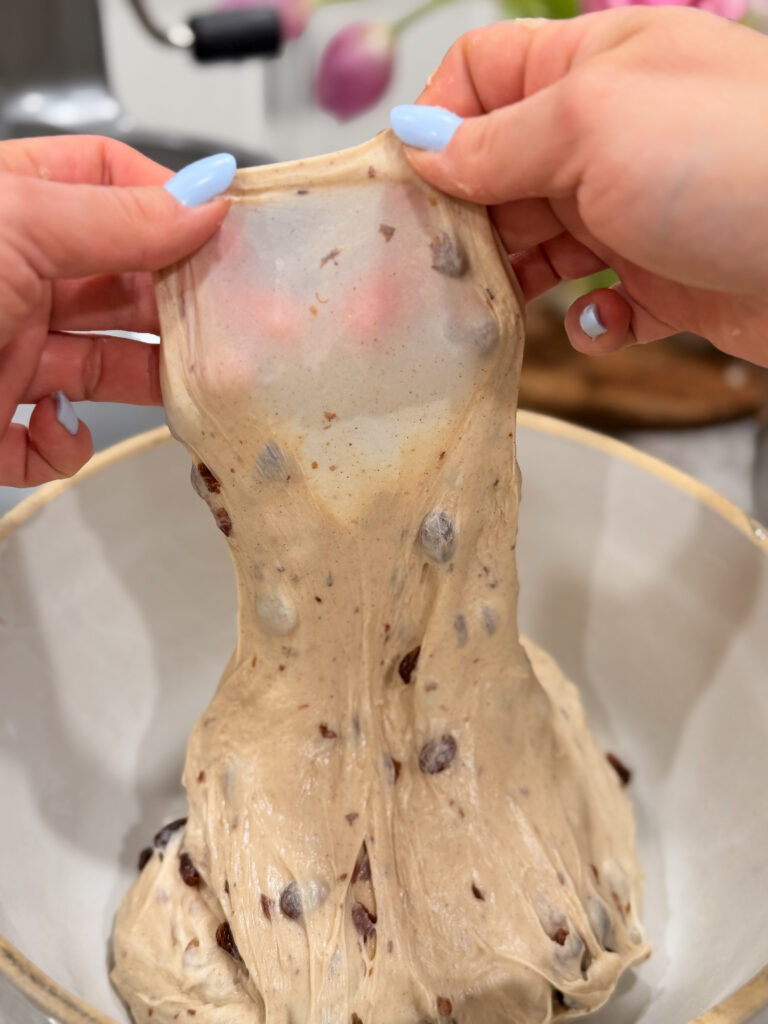
- smooth, elastic dough
- dough that wraps around the hook
- slightly sticky dough (not dry or stiff)
- You want it to pass the window pane test!
If your dough feels too stiff at this stage, add 1 tablespoon of milk at a time until it softens.
5. Add the Dried Fruit
Add the soaked dried fruit and mix until evenly distributed throughout the dough.
6. Bulk Fermentation (First Rise)
Transfer the dough to a large bowl and cover with plastic wrap or a damp tea towel.
Let it rise in a warm place for 4–6 hours.
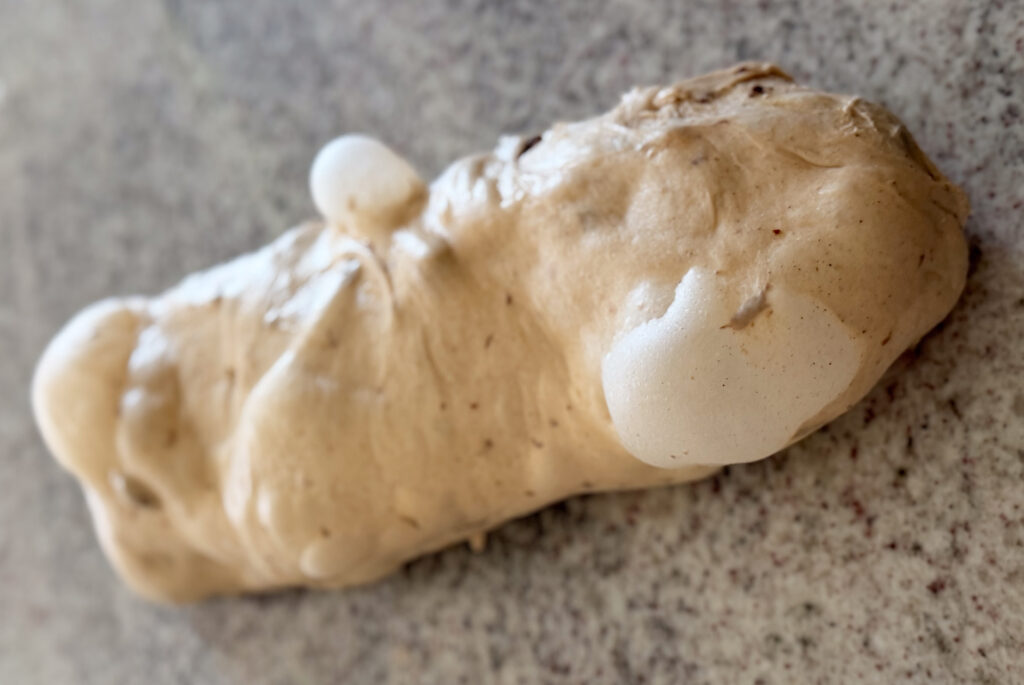
You are not looking for the dough to double. Instead, look for:
- about 30–50% rise
- a slightly puffy texture
Because this is an enriched dough, the rise will be slower than a typical sourdough bread recipe.
7. Shape the Dough
Turn the dough onto a lightly floured work surface.
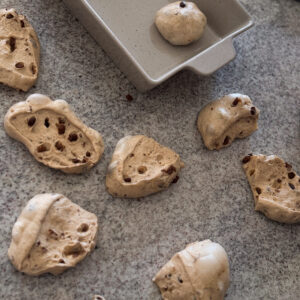
Divide into equal pieces (about 12). Each piece should be around 85–90 grams.
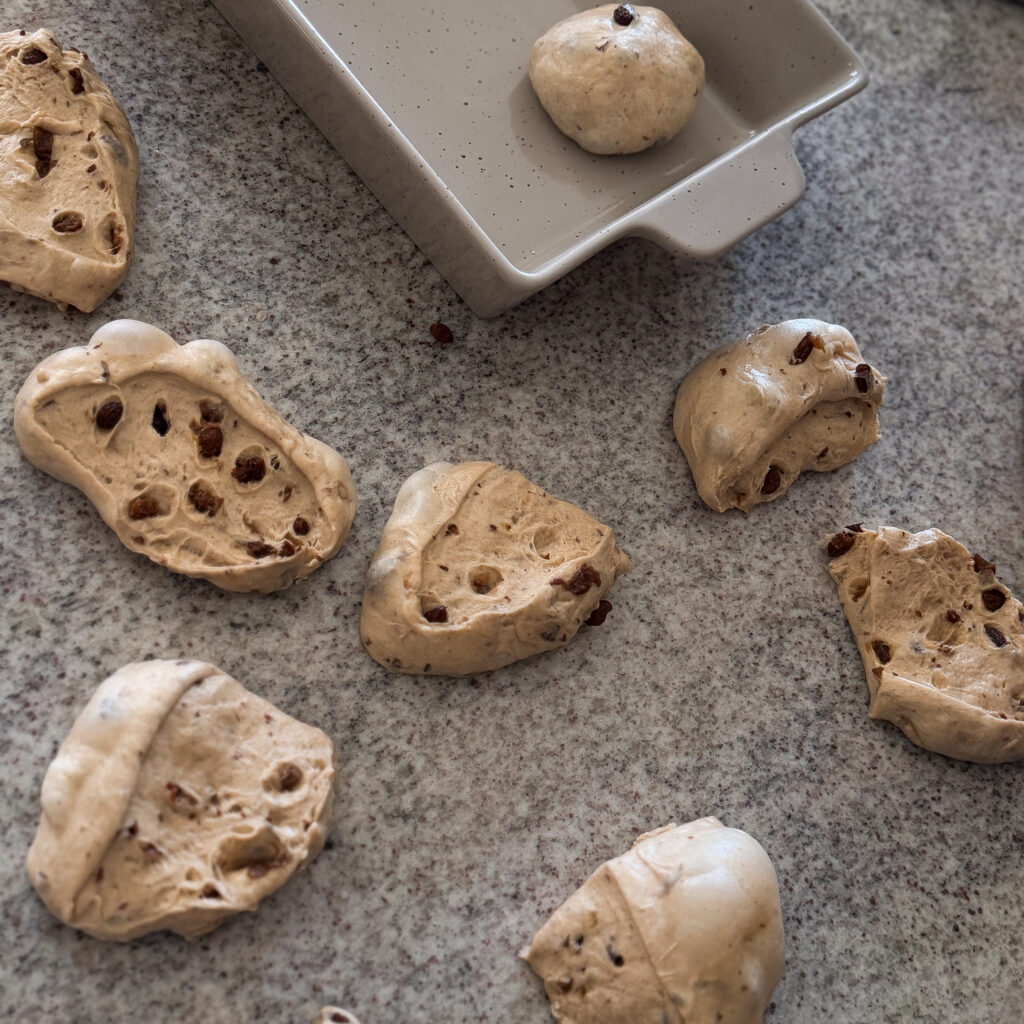
Shape into smooth dough balls by tightening the surface and rolling gently.
Place the dough balls into a parchment paper-lined baking dish, leaving a little space between them.
8. Final Proof (Second Rise)
Cover the shaped buns and let them rise for 2–3 hours, or refrigerate overnight and bake the next day.
They are ready when:
- noticeably puffy
- soft to the touch
- slightly jiggly
- gently spring back when pressed
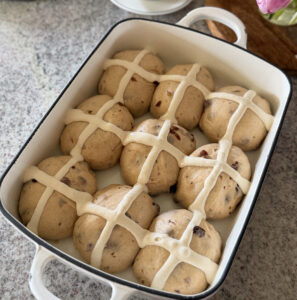
9. Pipe the Crosses
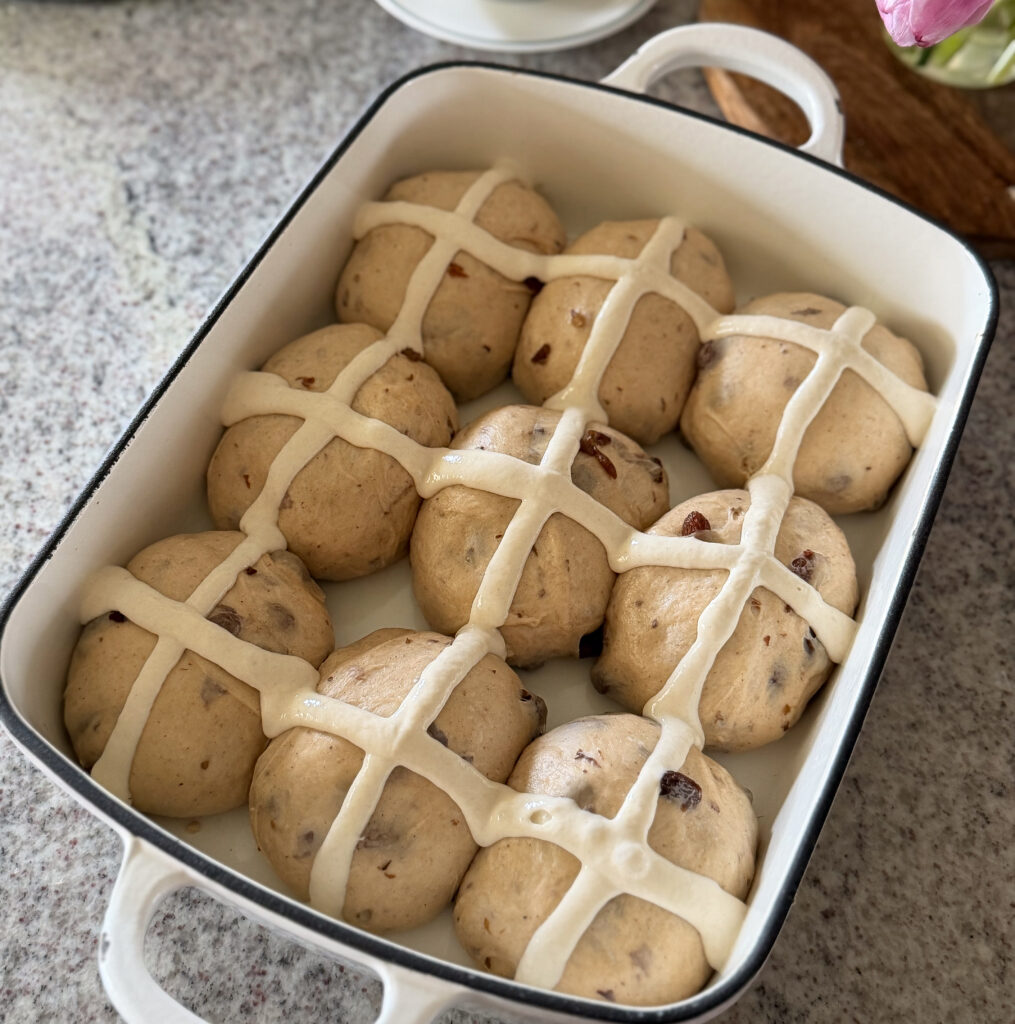
In a separate bowl, mix flour and water into a thick paste.
Transfer to a piping bag or plastic bag and snip the corner.
Pipe crosses over each bun right before baking. Make sure the lines are thick enough to stay visible after baking.
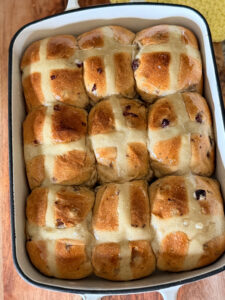
10. Bake
Bake in a preheated oven at 375°F (190°C) for 20–25 minutes.
The buns should be:
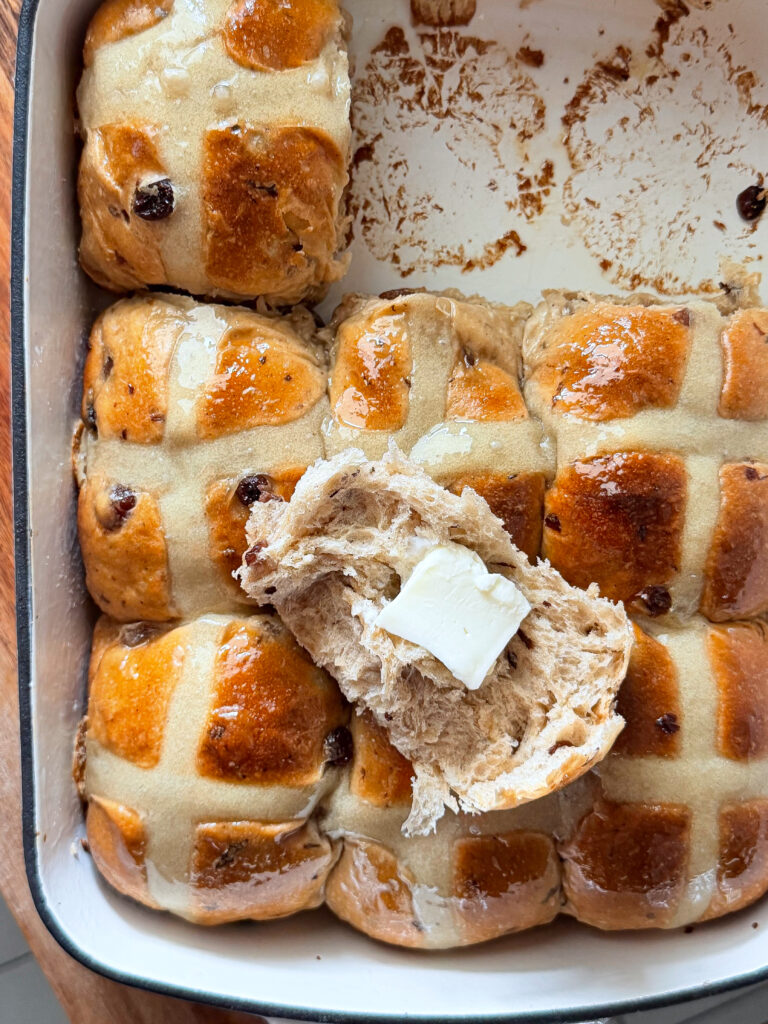
- deep golden brown
- fully baked through (internal temp around 200°F if you check)
11. Glaze
In a small saucepan over medium heat, combine sugar and water until dissolved.
Brush the buns with a pastry brush while they are still hot.
This creates a soft, shiny finish and keeps the tops from drying out.
You will also love these recipes!
- these Sourdough Discard Cheddar Chive Scones are one of the easiest and most flavorful. They’re tender, savory, deeply cheesy, and finished with a garlic-heavy cream wash that bakes into a beautifully golden brown crust.
- The softest sourdough chocolate babka with rich chocolate swirls
- Honey-roasted carrots with balsamic glaze, goat Cheese, Boursin cheese, and parsley. This dish combines sweet, salty, tangy, and creamy flavors.
Tips for Best Results
- Use room temperature ingredients for smoother mixing
- Always add extra liquid when using a stiff starter
- Dough should feel soft and slightly sticky—not stiff
- Mix long enough to fully develop the dough
- Pat dried fruit dry before adding
- Pipe crosses thick enough to hold shape
- Skip the egg wash—the sugar syrup gives a better finish
Troubleshooting
Dough is too stiff:
This is usually due to the stiff starter.
Fix: Add 1 tablespoon of milk at a time while mixing until the dough softens.
Mixer is struggling
- Dough may be too dry
- Let it rest for 5–10 minutes, then continue
- Add a small amount of milk if needed
Dough not coming together
Enriched dough takes time. Keep mixing and look for smoothness instead of dryness.
Buns turned out dense
- Dough wasn’t fully developed
- Underproofed or overproofed
Buns taste too sour
- Starter was over-fermented
- Dough fermented too long
Crosses disappeared
- Paste was too thin
- Lines were piped too small
Texture & Flavor
These sourdough hot cross buns have:
- a soft, fluffy interior
- light buttery richness
- warm spice flavor
- subtle citrus notes from the orange juice
- a balanced sourdough taste
This sourdough hot cross buns recipe gives you the best of both worlds—the classic look and flavor of traditional hot cross buns, but with a softer texture and more balanced taste.
Using a sweet stiff starter makes a noticeable difference, especially in enriched dough like this. It creates a more tender crumb, helps control sourness, and gives you consistent results.
Once you make them this way, it’s hard to go back to versions made with instant yeast or commercial yeast. These buns are soft, flavorful, and perfect for sharing during the Easter season or anytime you want a comforting, homemade bake.
If you try this recipe:
⭐ leave a rating
💬 drop a comment
📸 tag me so I can see your sourdough hot cross buns!
Sourdough Hot Cross Buns (Soft & Fluffy with Sweet Stiff Starter)
Equipment
- stand mixer with dough hook
- Food scale
- baking pan
Ingredients
Sweet Stiff Starter (prepare ahead)
- 30 g active sourdough starter
- 50 g white flour
- 20 g water
- 5 g honey
Hot Cross Bun Dough
- 500 g strong white bread flour
- 100 g sweet stiff starter
- 270 g room temperature milk
- 75 g sugar
- 1 large egg
- 75 g unsalted butter, softened
- 8 g salt
- 1 tsp cinnamon
- 1/4 tsp nutmeg
- 150 g dried fruit (raisins or currants)
- 1 cup Orange juice (for soaking the fruit)
- Optional: orange zest or orange peel
Flour Paste (for crosses)
- 50 g all-purpose flour
- 60 g water
Sugar Syrup Glaze
- 2 tbl sugar
- 2 tbl water
Instructions
Feed the Sweet Stiff Starter
- In a small bowl or clean jar, mix the active starter, flour, water, and honey until a stiff dough forms. It should feel like a soft dough ball, not pourable.Cover loosely and let it rise in a warm spot until:This step is important because a properly fermented starter will give your buns a better rise and softer texture.slightly domed on topexpanded in size (about 1.5–2x)smells mildly sweet, not overly sour
Soak the Dried Fruit
- Place your dried fruit in a small bowl and cover with warm orange juice. Let it sit for 15–20 minutes.
Mix the Dough
- In the bowl of a stand mixer, combine: milk, sweet stiff starter, sugar, and egg.Mix until smooth and the starter is broken up.Add: bread flour, salt, cinnamon, nutmeg.Mix until a shaggy dough forms. The dough may look slightly rough at this stage—that’s normal.Let the dough rest for 20–30 minutes. This rest period helps hydrate the flour and makes it easier to develop gluten.
Develop the Dough
- Attach the dough hook and begin mixing on medium speed for 5 minutes. Add the softened butter gradually, allowing it to fully incorporate before adding more.Continue mixing for 15–25 minutes. (let the mixer rest if it gets too hot)This step takes patience, but it’s key for soft buns. You’re looking for: smooth, elastic doughdough that wraps around the hook, slightly sticky dough (not dry or stiff)You want it to pass the window pane test!If your dough feels too stiff at this stage, add 1 tablespoon of milk at a time until it softens.
Add the Dried Fruit
- . Drain the fruit well and lightly pat dry before adding to the dough. This prevents adding too much extra moisture while still keeping the fruit soft and flavorful Add the fruit and mix until evenly distributed throughout the dough. Should take up to 5 minutes.
Bulk Fermentation (First Rise)
- Transfer the dough to a large bowl and cover with plastic wrap or a damp tea towel.Let it rise in a warm place for 4–6 hours.You are not looking for the dough to double. Instead, look for:about 30–50% risea slightly puffy textureBecause this is an enriched dough, the rise will be slower than a typical sourdough bread recipe.
Shape the Dough
- Turn the dough onto a lightly floured work surface.Divide into equal pieces (about 12). Each piece should be around 85–90 grams.Shape into smooth dough balls by tightening the surface and rolling gently.Place the dough balls into a parchment paper-lined baking dish, leaving a little space between them.
Final Proof (Second Rise)
- Cover the shaped buns and let them rise for 2–3 hours, or refrigerate overnight and bake the next day.They are ready when it is noticeably puffy, soft to the touch, slightly jiggly, and gently springs back when you press on it.
Pipe the Crosses
- In a separate bowl, mix flour and water into a thick paste.Transfer to a piping bag or plastic bag and snip the corner.Pipe crosses over each bun right before baking. Make sure the lines are thick enough to stay visible after baking.
Bake
- Bake in a preheated oven at 375°F (190°C) for 20–25 minutes.The buns should be: deep golden brownfully baked through (internal temp around 200°F if you check)
Glaze
- In a small saucepan over medium heat, combine sugar and water until dissolved.Brush the buns with a pastry brush while they are still hot.This creates a soft, shiny finish and keeps the tops from drying out.
Notes
Tips for Best Results
- Use room temperature ingredients for smoother mixing
- Always add extra liquid when using a stiff starter
- Dough should feel soft and slightly sticky—not stiff
- Mix long enough to fully develop the dough
- Pat dried fruit dry before adding
- Pipe crosses thick enough to hold shape
- Skip the egg wash—the sugar syrup gives a better finish



Reader Interactions