
The cozy holiday loaf you’ll want to bake again and again.
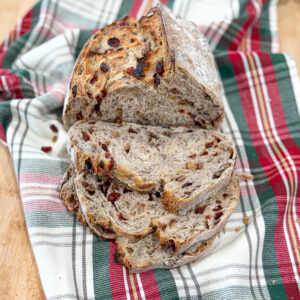
If you’ve been craving a festive sourdough recipe that combines chewy crumb, tart cranberries, and the perfect nutty flavor from toasted walnuts, this walnut cranberry sourdough is going to be your new favorite bread. It’s everything I love about seasonal baking — comforting, a little rustic, and so beautiful when it comes out of the oven with that deep golden brown crust. If you love cranberries this time of year, make sure to try our sourdough discard cranberry sweet bread!
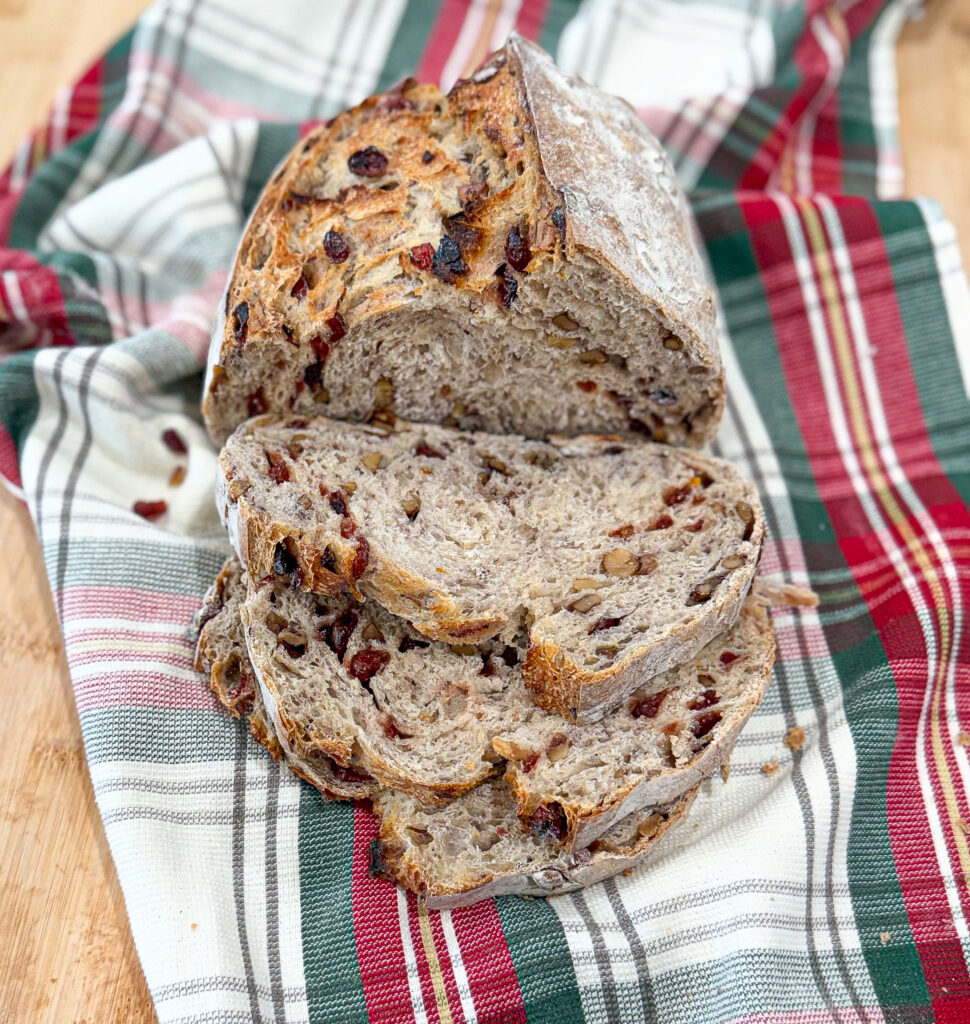
This cranberry walnut sourdough bread recipe starts with my reliable base dough: 500 g of flour, 325 g of water, 100 g active sourdough starter, and 10 g fine sea salt. It’s simple, forgiving, and works beautifully for enriched-style add-ins like earthy walnuts and tangy cranberries. For this loaf, we’ll swap in 50 g whole wheat flour to enhance the nutty depth and add a rich, wholesome flavor.
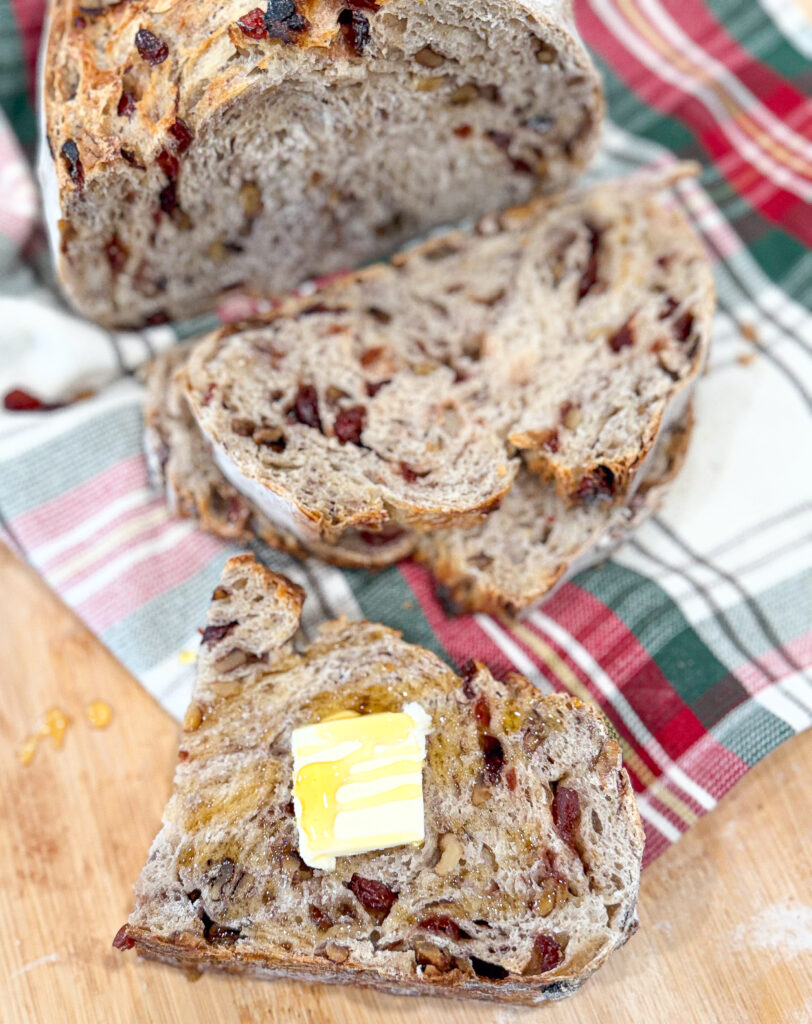
I’ll walk you through each step — from mixing, to the first set of stretch and folds, to shaping your round boule, all the way to the final rise. You’ll also learn how to read your dough during bulk fermentation, how to judge dough temperature, and how to get amazing oven spring in your hot Dutch oven. If you’re new to baking with dried cranberries or working with wetter dough, don’t worry — this tutorial is beginner-friendly and loaded with tips I’ve learned from baking loaf after loaf.
Why This Is the Perfect Holiday Loaf
This sourdough cranberry walnut bread is something I make every year when the holiday season hits. Here’s what makes it so special:
- Tart, sweet cranberries– Use dried cranberries, unsweetened cranberries, or even fresh cranberries for extra tang. A quick soak in warm water or orange juice makes them plump and glossy — the perfect contrast to chewy bread.
- Earthy, crunchy walnuts- Toasting the walnuts brings out their deep nutty flavor. Every bite gives you that cozy mix of sweet + nutty that just feels like winter.
- A soft, chewy crumb – Thanks to a higher hydration dough (335–340 g water total), this loaf comes out beautifully moist and open-crumbed without being overly wet
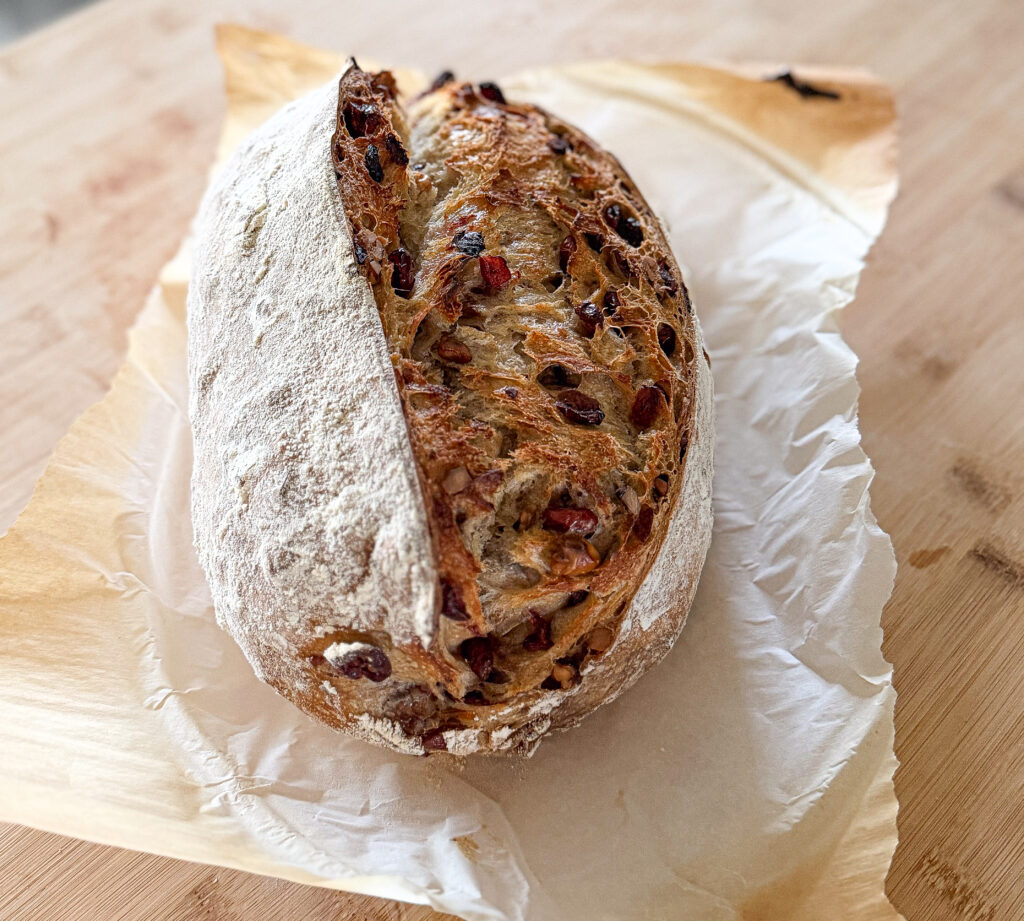
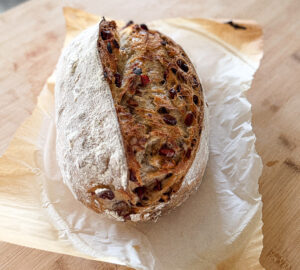
- Incredible oven spring- A pre-heated Dutch oven or baking steel gives this loaf its iconic rise. The surface of the dough cracks open dramatically — my favorite part.
- Beginner-friendly method- If you can mix dough in a large bowl, cover with plastic wrap or a tea towel, and do a few folds, you can bake this loaf. No special bread baker required.
Ingredients to make a walnut cranberry sourdough loaf
Here’s exactly what you need for your walnut cranberry sourdough:
For the Dough
- 100 g active sourdough starter (active starter, use the float test if unsure)
- 450 g bread flour
- 50 g whole wheat flour
- 340 g warm water (tap water is fine)
- 10 g fine sea salt
Add-Ins
- 100 g dried cranberries (or unsweetened cranberries for more tartness)
- Optional: fresh cranberries chopped, for extra tang
- 100 g toasted walnuts, roughly chopped
- Optional: zest of one orange
Equipment
- Large bowl
- Bench scraper
- Banneton basket or proofing basket ( use code “lizazykin” for 10% off!)
- Rice flour for dusting
- Parchment paper
- Dutch oven ( use code “liza15” to get $15 off my FAVORITE Dutch oven!)
- Wire rack or cooling rack

Step-by-Step Instructions
This is the part where the magic happens. Follow this baking schedule for the best results.
🕒 Baking Schedule (Easy Version)
Day 1 (Afternoon):
- Mix the dough
- 3 sets of stretch & folds adding walnuts + cranberries
- Bulk fermentation
- Shape
- Refrigerate overnight
Day 2 (Morning):
- Preheat oven
- Bake
- Cool & enjoy
Total time: A slow process, but extremely hands-off.
Mix the Dough
In a large bowl, combine:
- 100 g active sourdough starter
- 340 g warm water
- 450 g bread flour
- 50 g whole wheat flour
- 10 g fine sea salt
Stir until a wet shaggy dough forms. It will feel slightly sticky — that’s exactly what we want with a wetter dough like this.
Cover with a tea towel or plastic wrap and rest for 45 minutes.
This 45-minute dough rest helps fully hydrate the whole wheat flour.
First Set of Stretch & Folds – folding in the inclusions
After the dough has rested, perform your first set of stretch and folds:
During the first stretch, sprinkle on:
- Toasted walnuts
- Cranberries
- Orange zest
This will help the inclusions to incorporate more evenly into the dough! And the more stretch-and-folds you do, the more evenly it will disperse! Use gentle folding motions to distribute them without tearing the dough.
- Grab the top of the dough
- Stretch it upward
- Fold it over the center of the dough
- Turn the bowl a quarter turn
- Repeat 3–4 times, with a 45-minute rest between sets. The biggest tip I can give you is to make sure to keep the dough in a warm area! I recommend using a heating pad. This is the one I use and love!
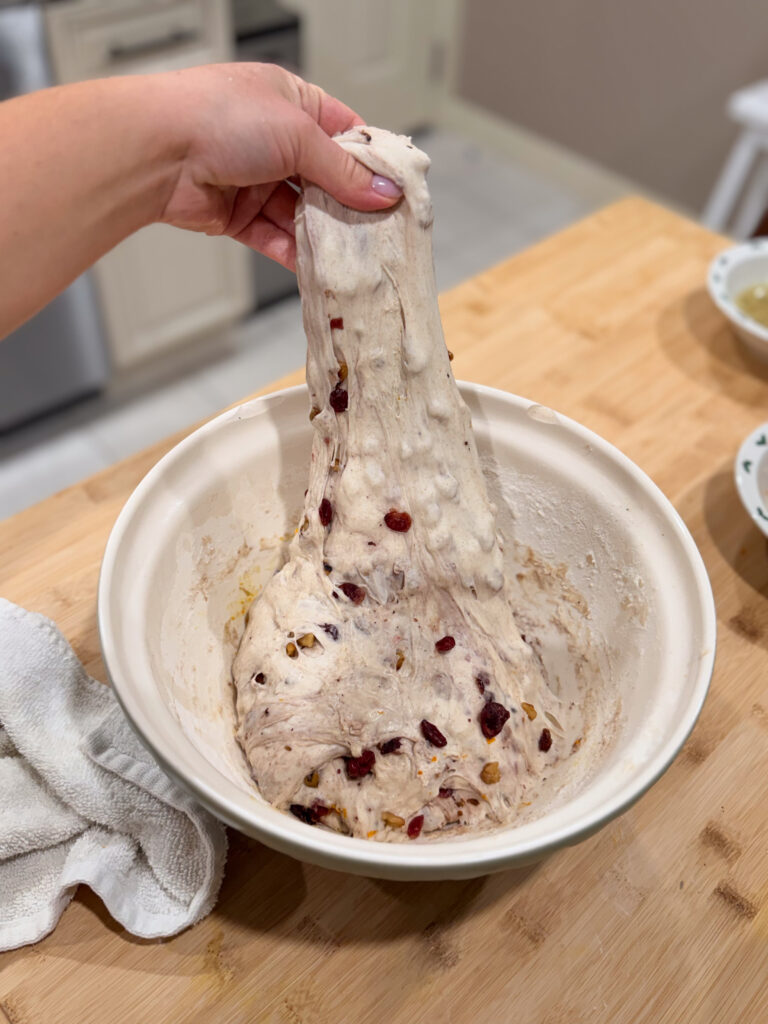
This step strengthens gluten and begins building surface tension in the dough. By the third fold, the dough should feel smoother, stronger, and more elastic.
Cover and let the dough rest.
Bulk Fermentation (2–3 hours)

Place the dough in a warm place — around 80°F- 95°F is ideal. Bulk fermentation is where your dough becomes airy and strong. Look for:
✔ A smoother appearance
✔ Slight puffiness
✔ A softer feel when you press the surface
✔ Gentle bubbles around the edges
Bulk fermentation is the only thing many beginners struggle with, because every dough rises differently. This is where you truly learn your dough.
Final Shape
Shape your dough into a round boule or a batard.
Dust your banneton basket (I use and love these baskets from Bulka! The quality is amazing!) with flour, and place the shaped dough inside, smooth side down. Cover with a tea towel or plastic wrap.

Cold Ferment — Overnight
Refrigerate the shaped dough for 12-24 hours (the next day).
Cold fermentation improves flavor, strengthens the dough, and makes scoring much easier.
Bake in a Hot Dutch Oven
Place your Dutch oven in the oven and heat to 475°F. ( I use the Krustic Dutch Oven and I absolutely love and recommend it! Use code “liza15” to get $15 off!
If you have an empty baking tray, place it under the Dutch oven, which helps prevent the bottom from burning! When the oven is ready:
- Turn the dough out onto a piece of parchment paper
- Score the top of the dough (one deep slash works great)
- Carefully place into the hot Dutch oven
Bake covered for 30 minutes, then uncover and bake until deep golden brown.
Move loaf to a wire rack or cooling rack. The hardest part? Waiting for it to cool.
Amazon Associate Note
As an Amazon Associate, I may earn a small commission if you purchase items using my links. This does not change the regular price for you — thank you for supporting our family!
Tips for Your Best Loaf
- Dust your banneton with flour- to help the dough to come out easier without tearing.
- Whole wheat flour absorbs more water- That’s why we increased the water to 340 g.
- Watch the dough, not the clock- Bulk fermentation depends heavily on dough temperature.
- If the dough is too stiff to stretch and fold, let it sit longer between sets, or it could be cold.
- The smooth side should face up when baking- It helps with clean scoring and a polished top of the dough.
- Wet dough likes gentle handling- Use a bench scraper to move, lift, and rotate.
Want to Help?
If you try this recipe, please leave a star rating on the recipe card — it means so much and helps others find this cranberry sourdough bread.
This walnut cranberry sourdough loaf is the perfect balance of chewy bread, tangy cranberries, and nutty walnuts. It’s beautiful enough for a holiday table but simple enough to bake any time you want something cozy. I hope this becomes one of your favorite breads — the kind you bake every year when cranberry season rolls around
Walnut Cranberry Sourdough loaf
Equipment
- Proofing basket
- Dutch oven
- Large mixing bowl
- Food scale
Ingredients
For the Dough
- 100 g active sourdough starter (active starter, use the float test if unsure)
- 450 g bread flour
- 50 g whole wheat flour
- 340 g water
- 10 g salt
Add-Ins
- 100 g dried cranberries (or unsweetened cranberries for more tartness)
- 100 g toasted walnuts, roughly chopped
- zest of one orange
Instructions
Mix the Dough
- In a large bowl, combine: 100 g active sourdough starter 340g warm water 450g bread flour 50g whole wheat flour 10g fine sea saltStir until a wet shaggy dough forms. It will feel slightly sticky — that’s exactly what we want with a wetter dough like this.Cover with a tea towel or plastic wrap and rest for 45 minutes.This 45-minute dough rest helps fully hydrate the whole wheat flour.
First Set of Stretch & Folds – folding in the inclusions
- After the dough has rested, perform your first set of stretch and folds: During the first stretch, sprinkle on: Toasted walnuts, Cranberries, Orange zest . Grab the top of the dough. Stretch it upward. Fold it over the center of the dough. Turn the bowl a quarter turn. Repeat 3–4 times, with a 45-minute rest between sets. The biggest tip I can give you is to make sure to keep the dough in a warm place using a heating pad. This is the one I use and love! This will help the inclusions to incorporate more evenly into the dough! And the more stretch-and-folds you do, the more evenly it will disperse! Use gentle folding motions to distribute them without tearing the dough.This step strengthens gluten and begins building surface tension in the dough. By the third fold, the dough should feel smoother, stronger, and more elastic.

Bulk Fermentation (2–3 hours)
- Place the dough in a warm place — around 80°F- 95°F is ideal. Bulk fermentation is where your dough becomes airy and strong. Look for:✔ A smoother appearance✔ Slight puffiness✔ A softer feel when you press the surface✔ Gentle bubbles around the edgesBulk fermentation is the only thing many beginners struggle with, because every dough rises differently. This is where you truly learn your dough.

Final Shape
- Shape your dough into a round boule or a batard. Dust your banneton basket (I use and love these baskets from Bulka! The quality is amazing!) with flour, and place the shaped dough inside, smooth side down. Cover with a tea towel or plastic wrap.
Cold Ferment — Overnight
- Refrigerate the shaped dough for 12-24 hours (the next day).Cold fermentation improves flavor, strengthens the dough, and makes scoring much easier.

Bake in a Hot Dutch Oven
- Place your Dutch oven in the oven and heat to 475°F. ( I use the Krustic Dutch Oven and I absolutely love and recommend it! Use code “liza15” to get $15 off! Turn the dough out onto a piece of parchment paper. Score the top of the dough (one deep slash works great). Carefully place into the hot Dutch ovenWhen the oven is ready:Bake covered for 30 minutes, then uncover and bake until deep golden brown.If you have an empty baking tray, placing it under the Dutch oven helps maximize oven spring.Move the loaf to a wire rack or cooling rack. The hardest part? Waiting for it to cool.





Reader Interactions